
How to Choose the Best Bicycles and Tricycles for Your Child

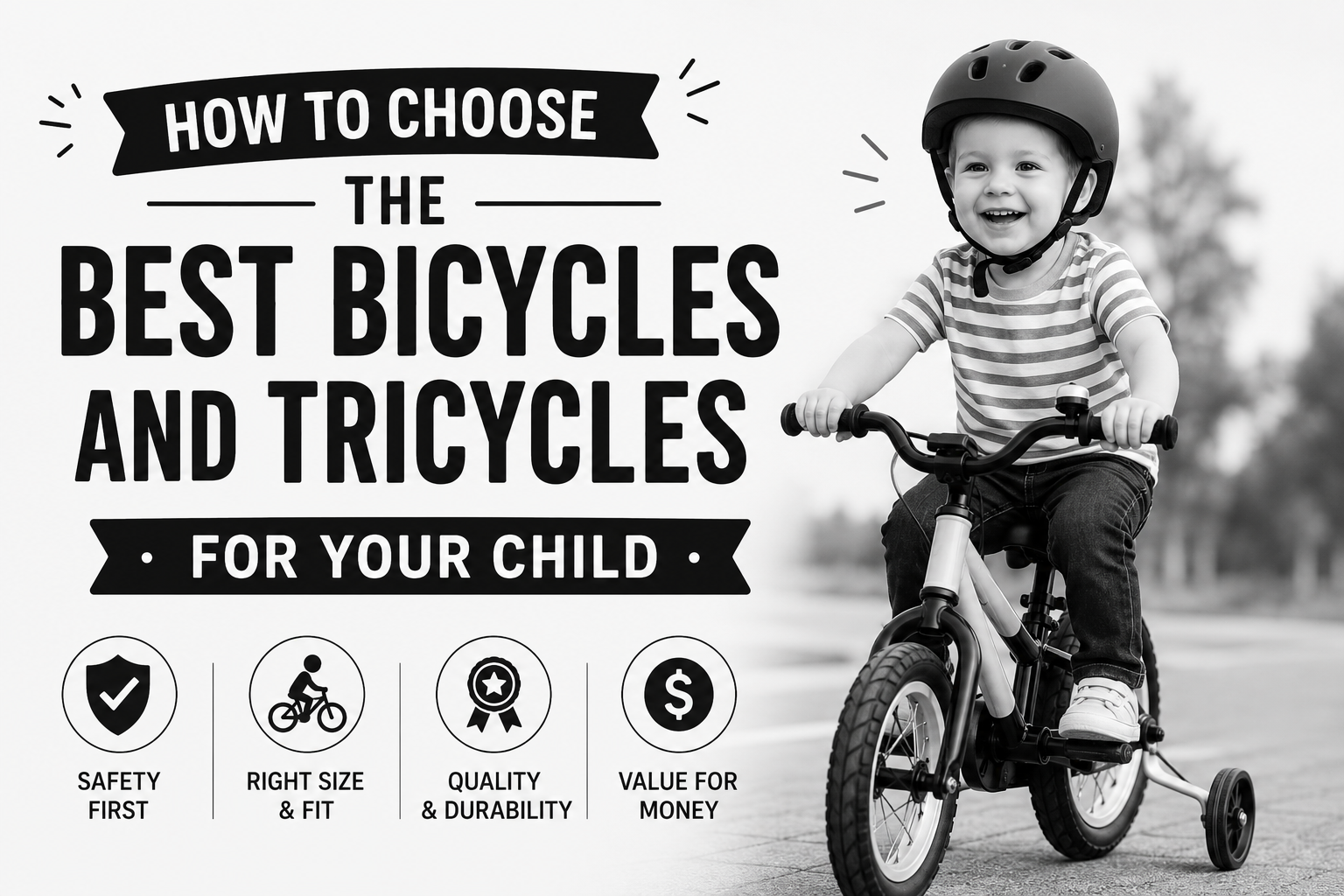
Buying a bicycle or tricycle for a child looks simple from outside. Many parents think any colourful cycle with attractive design is enough. But after some days, they realise the child is not comfortable, scared to ride, or simply loses interest.
From experience, the wrong cycle can reduce a child’s confidence instead of building it. That is why parents should focus less on appearance and more on comfort, balance, and real-life use.
A good bicycle or tricycle is not only for playtime. It helps children improve balance, body movement, confidence, and outdoor activity habits from an early age.
First Understand Your Child’s Age and Comfort
One common mistake parents make is buying a bigger cycle thinking the child will “grow into it.” In reality, oversized cycles create fear and poor balance.
The child should:
- Sit comfortably on the seat
- Reach the handle easily
- Touch feet on ground properly
- Control pedals without struggle
If your child feels unstable, they may avoid using it altogether.
For younger kids, tricycles make pictures better because they help with initial stability and coordination. As children develop, bikes with assistive wheels can help them manage scrutiny slowly.
Safety Should Always Come Before Design
Many parents choose cycles only because they look modern or stylish. But safety features matter more than looks.
Always check:
- Strong frame quality
- Stable wheels
- Smooth brakes
- Comfortable pedals
- Soft handle grip
Sharp edges or weak parts can create problems during regular use. Indian roads and park surfaces are not always smooth, so cycle strength matters a lot.
One important thing many parents ignore is seat comfort. Hard seats make children uncomfortable after short rides. A soft and balanced seat helps children enjoy cycling longer.
Don’t Buy Very Heavy Cycles
Heavy bicycles are difficult for children to control. They may struggle while turning, stopping, or lifting the cycle after falling.
Lightweight cycles help children:
- Learn faster
- Balance easily
- Feel more confident
- Move freely without fear
Parents often think strong means heavy, but that is not always true. A balanced lightweight frame is usually better for daily use.
Check Wheel Size Properly
Wheel length plays a huge role in both comfort and safety.
Small children prefer small wheels for greater stability. Larger wheels also come across as attractive yet difficult to repair.
Before buying:
- Let the child sit and try movement
- Check turning comfort
- See if feet touch ground properly
- Observe riding confidence
From practical experience, children learn cycling faster when the cycle size matches their height correctly.
Tricycles Are More Useful Than Many Parents Think
Some parents skip tricycles completely and directly buy bicycles. But tricycles actually help children improve:
- Leg movement
- Steering control
- Direction understanding
- Outdoor confidence
For toddlers, tricycles create a safe starting point before learning two-wheel balance.
Simple riding activities also reduce screen time and encourage outdoor play naturally.
Focus on Comfort for Daily Use
Children enjoy cycling only when the experience feels smooth and comfortable.
Good cycles should have:
- Adjustable seat height
- Easy pedal movement
- Comfortable grip
- Stable support wheels if needed
In Indian weather, outdoor play can become tiring quickly. So smooth movement matters more than extra features.
Parents should also check that the child can easily climb up and ride the bike without external support.
Avoid too many fancy features
Many bikes today have lights, panels, extra mounts and decorative parts. Most of these features draw attention for a short period of time yet do not greatly improve driving right now.
In fact, too many extra parts can:
- Increase cycle weight
- Distract children
- Create maintenance problems
- Reduce riding comfort
Brakes Should Be Easy to Use
Brake control is one of the most important safety points.
Some bicycles have brakes that feel too tight or difficult for small hands. Children may panic if they cannot stop properly.
Always test:
- Brake smoothness
- Handle grip comfort
- Child’s hand reach
Good control builds confidence during riding.
Outdoor Activity Is Important for Children
Today many children spend more time indoors with mobile screens and television. Cycling gives physical activity in a natural and enjoyable way.
Regular cycling helps:
- Body balance
- Leg strength
- Confidence
- Social interaction
- Outdoor habits
From experience, children who enjoy outdoor play often feel more active and cheerful in daily routine.
Parents Should Think Long-Term
Instead of buying based only on colour or trends, parents should think about daily use for the next few years.
Ask simple questions:
- Is the child comfortable?
- Can they ride safely?
- Is the cycle easy to handle?
- Will it support learning and confidence?
These practical points matter more than appearance.
Final Thoughts
Choosing the right bike or tricycle isn’t about buying the biggest or most attractive option. It is set by mastering while helping your child feel safe, secure and happy.
A good cycle supports both fun and development.
Children remember the feeling of freedom while riding. That confidence starts with the right comfort, right size, and proper support from parents.
Because in the end, the best cycle is the one a child enjoys riding every day.
FAQs
1. What age is best for a tricycle?
Most children can start using tricycles between 2 to 4 years depending on balance and comfort.
2. How do I know if a bicycle size is correct?
The child should touch the ground comfortably and reach handles without stretching.
3. Are support wheels useful for beginners?
Yes, support wheels help children build balance confidence during early learning.
4. Why should parents avoid heavy bicycles?
Heavy cycles are harder for children to control and may reduce riding confidence.
5. What is most important while choosing a child’s cycle?
Safety, comfort, correct size, and easy handling matter more than design or extra features.
